Quick answer
Track KPIs in real-time to respond faster to issues, make proactive decisions, identify opportunities immediately, maintain operational efficiency, and gain competitive advantages. Real-time KPI tracking enables organizations to monitor performance continuously and take timely corrective actions.
Track KPIs in real-time to respond faster to issues, make proactive decisions, identify opportunities immediately, maintain operational efficiency, and gain competitive advantages. Real-time KPI tracking enables organizations to monitor performance continuously and take timely corrective actions.
Real-time KPI tracking transforms traditional performance monitoring from reactive reporting to proactive management, enabling organizations to respond to business changes with unprecedented speed and precision. In an era of digital transformation and instant customer expectations, real-time metrics become the essential foundation for competitive business operations. Understanding why organizations should track KPIs in real-time reveals how this approach drives operational excellence and strategic success. Real-time KPI tracking is enabled by real-time analytics platforms and displayed through business dashboards and executive dashboards. For more on KPIs, see what are KPIs.
Why Track KPIs in Real-Time?
Real-time KPI tracking enables organizations to monitor key performance indicators continuously, providing instant visibility into business performance and enabling immediate response to emerging opportunities and threats. Traditional periodic reporting creates dangerous blind spots between measurement periods, while real-time tracking ensures organizations maintain constant awareness of their operational health.
Faster Issue Detection and Response
Real-time KPI tracking enables immediate identification of performance issues and rapid corrective action.
Instant Problem Recognition:
Real-time monitoring detects performance deviations, quality issues, or operational problems as they occur, preventing small issues from becoming major problems.
Rapid Response Capability:
Organizations can initiate corrective actions immediately when KPIs indicate performance deterioration, minimizing damage and recovery time.
Crisis Prevention:
Early detection of emerging issues allows organizations to implement preventive measures before problems escalate into crises.
Downtime Minimization:
Real-time monitoring of system availability, service levels, and operational metrics enables rapid response to outages and disruptions.
Proactive Performance Management
Real-time KPIs shift organizations from reactive management to proactive performance optimization.
Trend Monitoring:
Continuous KPI tracking reveals performance trends and patterns that indicate underlying issues or emerging opportunities.
Predictive Insights:
Real-time data patterns enable organizations to anticipate future performance based on current trajectories and market conditions.
Performance Optimization:
Ongoing visibility into KPIs allows continuous fine-tuning of processes, resources, and strategies for optimal performance.
Resource Allocation:
Real-time insights enable dynamic resource allocation based on current performance needs and business priorities.
Enhanced Decision-Making Speed
Real-time KPI tracking accelerates decision-making processes across the organization.
Current Data Access:
Decision-makers can access the most current performance data, eliminating delays from report generation and distribution.
Contextual Decisions:
Real-time context allows decisions to consider current market conditions, customer behavior, and operational realities.
Agile Response:
Organizations can adapt strategies and tactics in response to real-time market changes and competitive actions.
Crisis Management:
Real-time monitoring provides immediate situational awareness during business disruptions or market events.
Improved Operational Efficiency
Real-time KPI tracking drives continuous operational improvements and efficiency gains.
Process Optimization:
Ongoing visibility into process performance enables identification and elimination of inefficiencies as they occur.
Quality Assurance:
Real-time quality metrics ensure consistent delivery of products and services with immediate feedback on performance.
Resource Utilization:
Continuous monitoring of resource usage enables optimization of labor, equipment, and infrastructure utilization.
Waste Reduction:
Real-time tracking identifies waste, rework, and inefficiency sources for immediate corrective action.
Competitive Advantage Creation
Real-time KPI tracking provides significant competitive advantages in dynamic markets.
Market Responsiveness:
Organizations can respond to market changes, customer needs, and competitive actions faster than competitors using periodic reporting.
Customer Experience Enhancement:
Real-time monitoring of customer satisfaction and service quality enables immediate improvements to customer experience.
Innovation Acceleration:
Continuous performance insights support faster experimentation and innovation cycles.
Strategic Agility:
Real-time data enables rapid strategic adaptation to changing business conditions and market opportunities.
Risk Management and Compliance
Real-time KPI tracking strengthens risk management and regulatory compliance efforts.
Risk Monitoring:
Continuous tracking of risk indicators enables proactive risk mitigation and early warning systems.
Compliance Assurance:
Real-time monitoring ensures ongoing compliance with regulatory requirements and internal policies.
Financial Controls:
Real-time financial KPI tracking supports effective financial risk management and control.
Operational Safety:
Continuous monitoring of safety and operational risk metrics prevents incidents and ensures workplace safety.
Employee Performance Optimization
Real-time KPI tracking enhances individual and team performance management.
Performance Feedback:
Employees receive immediate feedback on their performance, enabling continuous improvement and skill development.
Motivation Enhancement:
Real-time visibility into performance progress motivates employees and supports achievement of performance goals.
Training Needs Identification:
Performance gaps identified through real-time tracking inform targeted training and development programs.
Recognition Opportunities:
Real-time performance achievements can be recognized and celebrated immediately.
Customer Satisfaction Improvement
Real-time KPI tracking directly impacts customer experience and satisfaction.
Service Quality Monitoring:
Real-time tracking of service delivery, response times, and quality metrics ensures consistent customer service.
Issue Resolution:
Immediate detection of service issues enables rapid resolution and prevents customer dissatisfaction.
Personalization Enhancement:
Real-time customer behavior insights support more effective personalization and customer engagement.
Loyalty Building:
Consistent delivery of quality experiences builds customer loyalty and reduces churn.
Financial Performance Enhancement
Real-time KPI tracking improves financial outcomes and profitability.
Revenue Optimization:
Real-time sales and revenue tracking enables immediate response to sales opportunities and performance issues.
Cost Control:
Continuous monitoring of cost metrics identifies cost overruns and optimization opportunities immediately.
Cash Flow Management:
Real-time cash flow and working capital monitoring supports effective financial management.
Profitability Tracking:
Ongoing visibility into profitability metrics by product, service, and customer enables margin optimization.
Strategic Alignment and Execution
Real-time KPI tracking ensures strategic objectives remain aligned with operational execution.
Strategy Execution Monitoring:
Real-time tracking ensures strategic initiatives remain on track and aligned with business objectives.
Goal Achievement Tracking:
Continuous monitoring of progress toward strategic goals enables course corrections and acceleration.
Initiative Performance:
Real-time insights into initiative performance support resource reallocation and strategic prioritization.
Performance Accountability:
Real-time visibility fosters accountability across teams and ensures alignment with strategic priorities.
Data-Driven Culture Development
Real-time KPI tracking supports the development of data-driven organizational culture.
Behavioral Change:
Immediate feedback from real-time KPIs encourages data-driven decision-making throughout the organization.
Transparency Enhancement:
Open access to real-time performance data builds trust and transparency in organizational performance.
Learning Acceleration:
Continuous performance insights accelerate organizational learning and improvement cycles.
Innovation Culture:
Real-time data supports experimentation and innovation by providing immediate feedback on new initiatives.
Technology and Process Integration
Real-time KPI tracking enables integration across business systems and processes.
System Integration:
Real-time data flows support integration between operational systems, analytics platforms, and business applications.
Process Automation:
Real-time KPI thresholds can trigger automated responses, alerts, and process adjustments.
Workflow Optimization:
Continuous performance insights enable optimization of business workflows and processes.
Cross-Functional Alignment:
Real-time visibility ensures alignment between different business functions and departments.
Implementation Success Factors
Successful real-time KPI tracking requires careful planning and implementation.
KPI Selection Strategy:
Choose KPIs that are measurable in real-time, relevant to business objectives, and actionable for decision-making.
Technology Infrastructure:
Implement data collection systems, analytics platforms, and visualization tools that support real-time processing.
Data Quality Assurance:
Ensure data accuracy, completeness, and timeliness to maintain confidence in real-time insights.
Change Management:
Prepare organizations for the behavioral changes required for real-time performance management.
Measuring Real-Time KPI Success
Organizations should track metrics to evaluate the effectiveness of real-time KPI tracking.
Response Time Metrics:
- Average time to detect performance issues
- Time to initiate corrective actions
- Issue resolution speed improvements
Performance Impact Metrics:
- Operational efficiency improvements
- Customer satisfaction increases
- Financial performance enhancements
Organizational Impact Metrics:
- Decision-making speed improvements
- Employee engagement increases
- Data-driven culture adoption rates
Common Real-Time KPI Challenges
Organizations face several challenges when implementing real-time KPI tracking.
Data Overload Issues:
- Solution: Focus on 5-7 critical KPIs most relevant to business success
- Approach: Prioritize KPIs based on strategic importance and actionability
Alert Fatigue:
- Solution: Implement intelligent alerting with threshold-based notifications
- Approach: Use machine learning to identify meaningful alerts and reduce noise
Technology Integration:
- Solution: Choose platforms with strong integration capabilities and APIs
- Approach: Start with pilot implementations to prove integration feasibility
Cultural Resistance:
- Solution: Demonstrate clear business value and provide training
- Approach: Begin with visible quick wins to build organizational confidence
Data Quality Concerns:
- Solution: Implement automated data validation and quality monitoring
- Approach: Partner with IT teams to ensure data pipeline reliability
Future of Real-Time KPI Tracking
Real-time KPI tracking capabilities will continue to evolve with technological advancements.
AI-Powered Insights:
- Machine learning algorithms for automated anomaly detection and predictive alerting
- AI-driven KPI recommendations and automated insights generation
- Intelligent threshold setting based on historical patterns and business context
Advanced Analytics Integration:
- Real-time predictive analytics for performance forecasting and trend analysis
- Automated root cause analysis for performance issues and opportunities
- Real-time causal relationship discovery between KPIs and business outcomes
Augmented Reality Interfaces:
- AR dashboards for hands-free performance monitoring in operational environments
- Spatial KPI visualization for complex operational and geographic performance data
- Voice-activated KPI queries and real-time voice responses
Edge Computing Applications:
- Real-time KPI processing at the network edge for ultra-low latency insights
- IoT sensor integration for real-time operational and equipment performance monitoring
- Distributed KPI tracking across global operations and supply chains
Real-time KPI tracking represents the essential foundation for modern business performance management, enabling organizations to maintain constant awareness of their operational health and respond to changes with unprecedented speed. By shifting from periodic reporting to continuous monitoring, organizations gain the agility and responsiveness required to succeed in competitive, fast-moving markets.
FireAI delivers comprehensive real-time KPI tracking as a primary business intelligence platform for performance management and strategic decision-making. With advanced KPI dashboards, automated alerts, predictive analytics, and extensive data integrations, FireAI provides the enterprise-grade capabilities that organizations need for continuous performance monitoring. As a full-featured BI solution trusted by Indian businesses, FireAI transforms KPI tracking from reactive reporting to proactive performance management.
As business complexity and market volatility continue to increase, real-time KPI tracking becomes not just a competitive advantage, but a strategic necessity for organizations seeking to maintain operational excellence and market leadership in the digital economy.
Ready to act on your data?
See how teams use FireAI to ask in plain language and get analytics they can trust.
Explore FireAI workflows
Go from this topic into product features and solution paths that match what you read here.
Topic hub
Dashboard And Reporting
Practical content on KPI dashboards, executive reporting, trend analysis, charts, and reporting automation.
Explore hubFrequently asked questions
Related in this topic
Why Automate Business Reporting?
Discover why automating business reporting is essential for modern organizations. Learn about time savings, accuracy improvements, real-time insights, and how automated reporting transforms business intelligence and decision-making processes.
Why Should Executives Use Analytics Dashboards?
Discover why executives should use analytics dashboards for strategic decision-making. Learn about real-time insights, performance monitoring, faster decisions, and how dashboards provide C-suite executives with the data they need to drive business success.
Why Do Businesses Need Real-Time Analytics?
Discover why real-time analytics is essential for modern businesses. Learn about immediate insights, faster responses, competitive advantages, and how real-time data analysis enables proactive decision-making and operational excellence.
What is a Real-Time Dashboard?
A real-time dashboard displays business data as it happens — orders, transactions, inventory changes, and operational events — updating automatically without manual refresh. Learn what real-time dashboards are, how they work, and when your business needs one.
From the blog

What is a KPI dashboard and why does every Indian business need one?
Still piecing together your business numbers from WhatsApp messages and old Excel files? Here is why a KPI dashboard changes everything for Indian businesses.
The 10 KPIs Every CEO Should Track Weekly and How Fire AI Automates them
CEOs don’t fail because they lack data. They fail because the right insights arrive too late. In today’s high-speed markets, leadership can’t afford to wait weeks for quarterly reports or rely on siloed dashboards. Weekly visibility into the most critical Key Performance Indicators (KPIs) can mean the difference between scaling ahead—or reacting too late. This blog reveals the 10 KPIs every CEO should track weekly and explains how AI-powered platforms like Fire AI automate them with predictive analytics, real-time dashboards, and conversational insights.
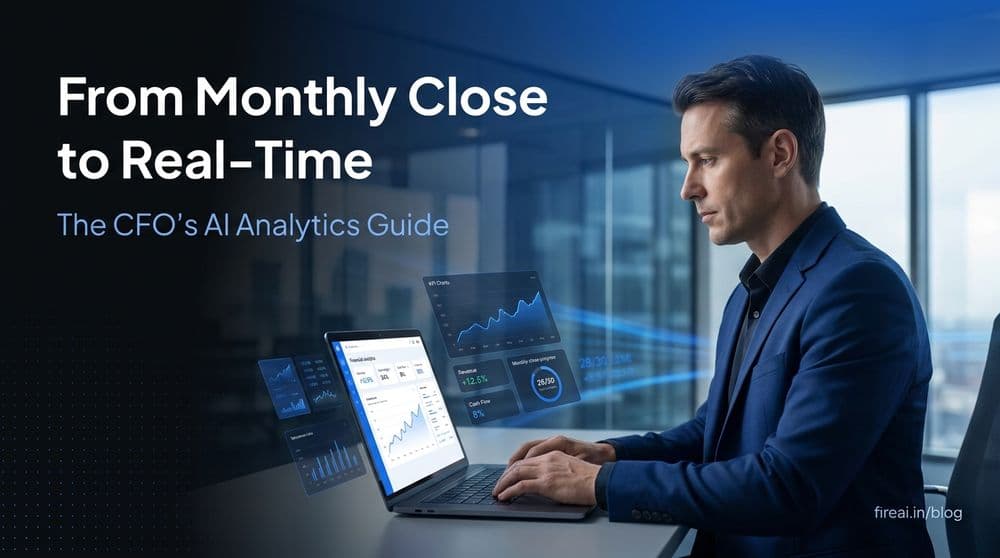
CFO’s AI Analytics Guide 2026: From Monthly Close to Real Time
A working CFO AI analytics guide: replace the monthly close lag with real-time financial analytics, AI FP&A automation, and a CFO dashboard that decides.